In the poultry industry, a great deal of attention is paid to feed, its composition and feeding strategies. This makes sense, as nutrition drives performance. Yet one crucial factor is still too often underestimated: drinking water. Whilst poultry drinks on average up to twice as much as it eats, water quality is sometimes overlooked. And that is a missed opportunity, because good drinking water is at least as important for health, growth and technical performance.
Water: an underrated nutrient
Water is not merely a carrier of nutrients or supplements, but an essential nutrient in its own right. Poor water quality can affect feed intake, cause stress and compromise gut health. Anyone aiming for top performance must therefore look not only at the feed ration, but also at what is actually coming out of the drinking line.
Biofilm: the silent culprit in drinking water pipes
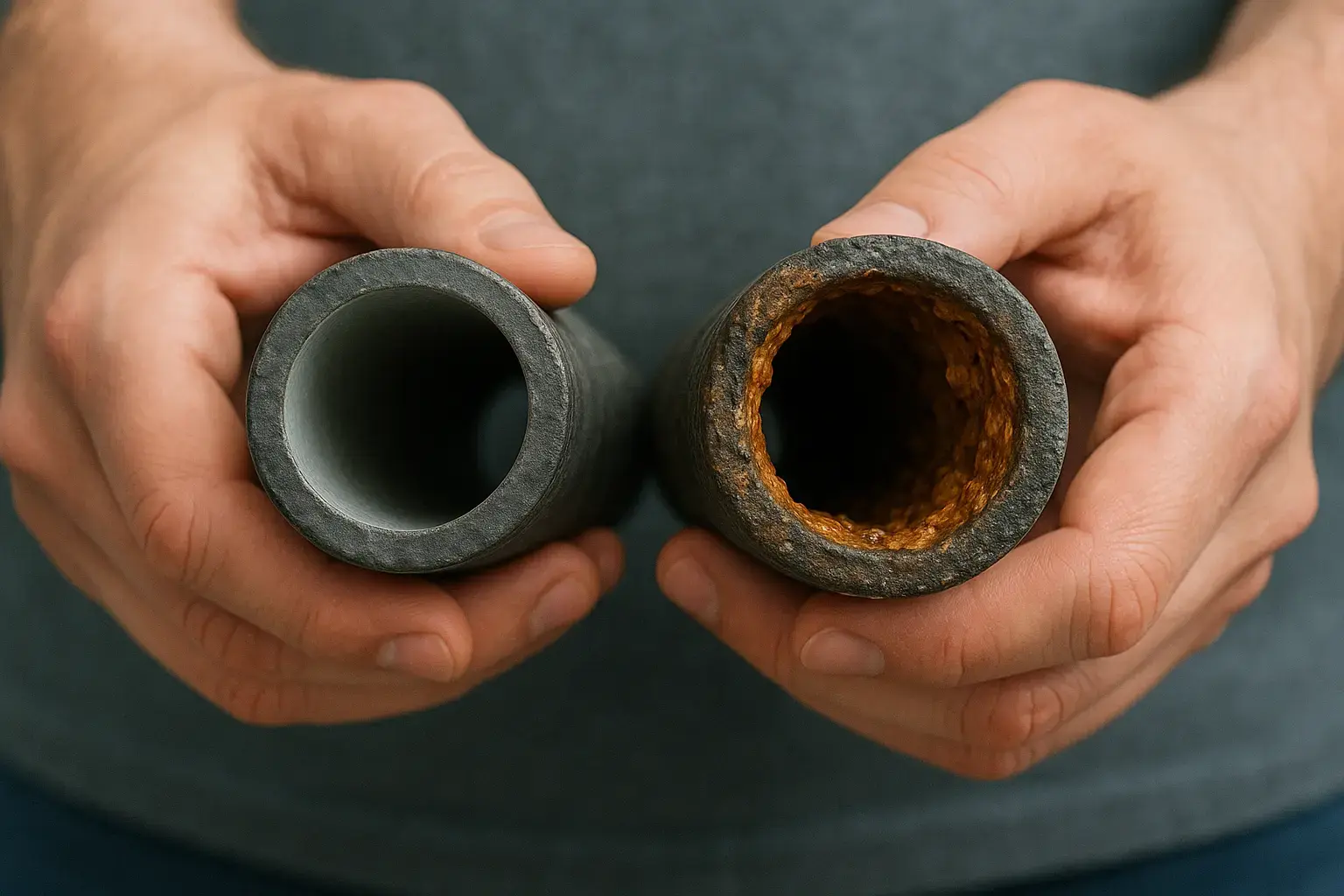
Biofilm can form in virtually any drinking water system: a slimy layer in which bacteria, yeasts and moulds attach themselves and protect themselves with mucus they produce. This structure makes it difficult for conventional disinfectants to reach the microorganisms.
The problem is that pathogens such as E. coli, Enterococci and Salmonella can also thrive in biofilms without difficulty. From there, they can colonise the gut and spread further via manure in the barn, resulting in a persistent risk of infection.
But biofilm is not just a source of infection. Bacteria living within the biofilm produce harmful metabolites that are toxic to the animals, such as endotoxins and mycotoxins. These can disrupt gut health and put a strain on the immune system.
In practice, these toxins produced by bacteria can lead to:
- Reduced growth and higher feed conversion
- More frequently wet manure
- Increased susceptibility to bowel disorders
- Declining immunity
If intestinal disorders lead to diarrhoea, and consequently to wetter litter and poorer-quality manure, this also causes footpad lesions (also known as pododermatitis); these inflammations or wounds on the underside of the feet are not only a source of suffering for poultry, but are also often an indicator of reduced production. This can even lead to rejection at the slaughterhouse. It is no coincidence that footpad lesions are an important parameter in assessing animal welfare.
Footpad lesions can be prevented:
healthy water promotes a healthy gut
Extra vigilance with young animals
Water quality is particularly important for day-old chicks and young animals. Their gut flora is still developing rapidly and is therefore highly susceptible to harmful bacteria from the drinking water system.
What’s more, the situation is often particularly challenging when it comes to young animals:
- water absorption is relatively low, which limits the flow
- the barn temperature is high, which encourages biofilm growth
- drinking water additives are being supplied more frequently, which can feed biofilm
It is precisely during this start-up phase that a clean and safe drinking water system is crucial.
Regular checks remain essential
An annual water analysis is valuable, but in practice it is not always sufficient to detect problems in good time. Regular checks are therefore still recommended.
For example:
- frequent inspection of filters (preferably transparent)
- drain the water into a white bucket to make any dirt visible
- monthly assessment of smell and taste
- a thorough inspection of the entire water system
Early warning signs provide an opportunity to take swift corrective action.
Rinsing and disinfecting: a powerful combination
Regular flushing of the drinking lines is one of the basic measures for limiting biofilm. This can be done perfectly well with water and is increasingly supported by automatic flushing systems, even during the round. In practice, however, flushing alone is not always sufficient to keep biofilm fully under control, particularly when it has been present for some time. In such cases, targeted drinking water disinfection can be a valuable addition.
Biofilm in pipes
Targeting biofilm
Traditional chlorine-based products do have some drawbacks when it comes to disinfecting drinking water. They are, in fact, unstable: the active chlorine in the pipes breaks down after just 4 hours. As a result, it very often does not reach the end of the pipes. And even in sealed packaging, you lose 17% (1/6th) of the active chlorine within 3 months when stored at around 15°C. After 1 year, you are left with a maximum of 7% chlorine… And that is in sealed packaging. Imagine what happens with an open container, and at higher temperatures…
Furthermore, conventional chlorine is ineffective in neutral to alkaline water. It does not clean the water and does not penetrate the biofilm. Moreover, it binds with ammonium to form chloramines, which have a bad taste, and it forms trihalomethanes (THMs) in the presence of organic matter. On top of that, it loses its disinfecting properties in the presence of organic matter. Conventional chlorine products are therefore generally ineffective at keeping drinking water pipes clean and reliable.
IF Hydrodiox takes a completely different approach. It is a chlorine dioxide-based drinking water disinfection system. Unlike traditional chlorine-based products, chlorine dioxide remains present in the drinking water pipes as a dissolved gas. This allows it to penetrate deep into the structure of biofilm, breaking it down from within and removing it.
Benefits of IF Hydrodiox:
- 2.5 times more powerful as an oxidant than chlorine
- removes biofilm
- pH-independent action: it is active between pH 4 and 11
- remains effective at higher temperatures
- removes inorganic contaminants (Fe, Mn…)
- does not form chlorinated by-products
- much less corrosive than chlorine; does not hydrolyse into acid
- tasteless & odourless
- very broad spectrum of activity
- effective in low doses
- prevents algae growth
In summary, IF Hydrodiox is up to 263% more effective than traditional chlorine-based disinfectants (such as sodium hypochlorite, bleach or active chlorine).
IF Hydrodiox can be used:
- periodically, for thorough pipe disinfection when the property is vacant (PT4)
- continuously, at a low maintenance dose during the cycle (PT5)
Thanks to its two-component system, IF Hydrodiox has a long shelf life: unopened, the product remains stable for up to two years. This makes it practical to use and advantageous from a cost and stock management perspective.
Drinking water free from biofilm for healthy poultry
Drinking water deserves at least as much attention as feed. By actively managing biofilm formation, carrying out regular checks and combining flushing with a well-planned drinking water disinfection regime, you lay a solid foundation for healthy intestines, improved performance and more stable farm management.
Because safe drinking water is no minor matter.
Together for better farming.