How to limit damage caused by Asian hornets?
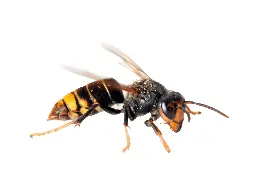
The Asian hornet (Vespa velutina) is rapidly spreading across Belgium and the Netherlands. What once seemed like a local problem for beekeepers is now becoming a widespread threat to agriculture. The increase in nests and attacks is not only putting pressure on the bee population, but also has indirect consequences for livestock farmers: from disruption on the farm to reduced pollination of crops in the surrounding area.
1. The situation in Belgium and the Netherlands is worsening
The reports do not lie:
- In Flanders, the number of Asian hornet nests will have doubled to almost 15,000 reports by 2025. Beekeepers report that their hives are being attacked; one beekeeper from Poperinge has already killed more than 1,000 Asian hornets in a single season.
- The species is also advancing in the Netherlands: according to the Dutch Food and Consumer Product Safety Authority, complete eradication is no longer feasible.
Asian hornets are therefore no longer an exotic problem — they are becoming increasingly numerous and are affecting our agricultural systems.
2. Why livestock farmers should also remain alert
Although hornets rarely cause direct damage to livestock, the indirect effects are significant:
- 🐝 Less pollination: hornets actively hunt honey bees and bumblebees. Fewer pollinators means lower yields of local crops such as maize, alfalfa, and clover — crops that are often used as animal feed.
- 🌾 Disrupted ecosystem around the farm: fewer insects means less natural pest control, which can affect the ecological balance around the farm.
- 🐄 Nuisance and safety risks: nests are often built in barns, hedges or stables. Hornets can react aggressively when disturbed, which can be dangerous for staff, animals and visitors.
- 🧴 Greater emphasis on hygiene management: killing or repelling hornets requires an integrated approach within the broader pest management programme at the company.
In short: where there is livestock, there is feed, water, warmth and shelter — exactly what hornets are attracted to.
3. How to recognise the Asian hornet
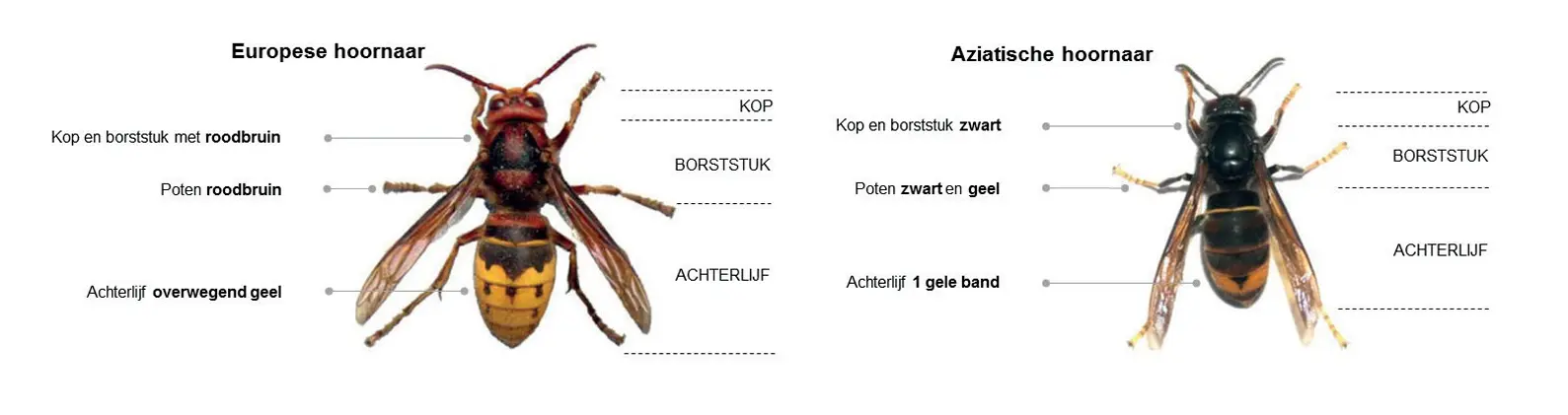
Correct identification is important to avoid confusion with the harmless European hornet:
What does the Asian hornet look like and where can you find it?
- Colour: predominantly black chest and head, with orange-yellow leg tips.
- Abdomen: predominantly black with one broad yellow band.
- Nesting locations: often high up in trees, but sometimes also low down in bushes and in stables, barns or under roof overhangs.
Are you unsure? Report sightings through official channels such as Vespa Watch (Belgium) or the NVWA reporting centres (Netherlands).
4. What can livestock farmers do?
Practical approach for agricultural businesses
You can do more than you think! A combination of early detection, monitoring and preventive control is the most effective approach. Indufarm offers the following tools for this purpose:
A powerful attractant that specifically attracts Asian hornets. Ideal for catching queens and workers before they hibernate in autumn or in spring before they build their nests.
👉 Look at Trappit
A sustainable trap that, in combination with the bait, efficiently catches hornets. Perfect for placement around stables, storage areas, or tree edges.
👉 Check out the Dome Trap
Tip: The queens fly out in autumn (September/October) to mate and find a place to hibernate. When they end up in a trap along the way, this means hundreds fewer hornets next season...
Although primarily intended for crawling insects and rodents, Permas-D is part of an integrated pest management programme on the premises. It helps to improve overall hygiene and safety, reducing the likelihood of other pests.
👉 Check out Permas-D
5. Tips for livestock farmers
1. Regularly check around barns, feed storage areas and trees.
2. Hang bait traps in spring (March–May) and autumn (September–October) to catch queens.
3. Change the bait regularly for a lasting effect.
4. Wear protective clothing when removing traps or nests.
5. Report sightings – every report helps to limit the spread.
6. Draw up an action plan for your company, or seek guidance in doing so.
6. Stronger together against invasive pests
At Indufarm, we believe in "Together for better agriculture".
The battle against the Asian hornet is a clear example of this: it requires cooperation, vigilance and the right resources. By monitoring in a timely manner and taking targeted action, you not only protect your property and employees, but also contribute to a healthier agricultural environment.
Would you like more information or advice?
👉 Contact Indufarm for advice on trap placement, the right attractants, and an integrated pest management strategy.
"One nest of Asian hornets kills and consumes an average of 11 kg of insects during one season."